

Eight Signs of a Website That will be No Fuss to Localize


The first thing required to achieve international success is a product that meets the needs of the target audience. But without localization of your website, foreign customers might not understand WHAT you are offering, WHY they need it and HOW they can get it.
On the importance of website localization
Paying foreign audiences being one click away doesn’t mean they will buy something at your site. According to a study by Nimdzi, 90% of consumers will ignore a product unless the website is translated into their language. This applies even to English-language sites: over 60% of people with good English proficiency still prefer products they can read about in their first language.
Here are some figures from a CSA Research study:
- 40% of respondents won’t buy at foreign language websites;
- 65% prefer content in their native language;
- 73% of respondents would like to see product reviews in their native languages;
- 7% admit that getting information about the goods in their native language is more important than its price.
But localization is about more than just understanding the text. It is also related to your image and loyalty. A translated website shows potential foreign clients that you care, respect them and invest effort into communicating with them. Localization helps create trust, which is a decisive factor for running a successful online business in selected markets.
Besides, website adaptation for a specific target market is a lucrative investment. Localization Industry Standards Association (LISA) once calculated that every euro spent for website localization on average brings 25 euros of profit.
Problems website owners might encounter during and after localization
- Technical aspects: no multilingual support in the CMS or bugs related to different alphabet characters display.
- Content: complete or partial absence of translation or low-quality translation.
- Cultural aspects: underestimating or ignoring cultural differences and preferences of the local audience, which might lead to losing the trust of certain customer groups or offending them.
- Design and UX: issues with content adaptivity and display on different devices, placement of interface elements inconveniently (illogically) for users from different cultures, incorrect text direction in certain languages, complicating users’ interaction with the site.
- SEO: no metatag, URL and keywords optimization for each localized site version, which affects its search engine ranking.
To avoid these issues, one should adopt a thorough and responsible approach to localization.
Preparing for localization
If you understand what localization is and why you need it, you have made your first step towards international success. But the most important work is still ahead. Get ready to be an active participant in this process, because even if you select an experienced professional contractor, the efficiency of localization still largely depends on you. Create a clear and transparent requirements list to concentrate the provider’s efforts on the most important content, facilitate understanding of your goals by the translators and speed up the localization process.
Start with your website audit to determine the elements that are most important for your product, its perception and understading by consumers. Remember that audiovisual content — images, videos, sound effects, music etc. — should be localized along with the text. Draft a list of languages optimal for localization in the selected target regions. Describe your audience, their consumers behaviors, pains and needs, study cultural differences. Finally, think about configuring your content management system and connecting an API in order to set up continuous localization, which will simplify and speed up the flow of translated and localized content to make it ready to publish right away.
But these preparation stages will not facilitate effective localization unless you have accounted for language and cultural adaptation of your website when designing it.
Things to pay attention to when designing a website to facilitate its localization in future: eight aspects
- Clear structure
The site should have a clear structure and content placement logic. This helps localzers to navigate the content and provide a similar structure for all language versions.
- Interface adaptivity
Translation into a foreign language can cause some dramatic changes in the page layout. Every language has a set of characters (Cyrillic letters, Latin letters, hieroglyphics, etc.), different lengths of the same words, sometimes even text direction, like in Hebrew or Arabic.
Approximate calculations of text length change when translated from one language to another have been done. For example, for translation from English:
- into French: (+)21.18%,
- into Italian: (+)17.91%,
- into German: (+)16.67%,
- into Portuguese (Portugal): (+)14.29%,
- into Portuguese (Brazil): (+)12.96%,
- into Czech: (+)3.70%,
- into Arabic: (–)6.25%,
- into Japanese: (–)39.68%,
- into Chinese (Mandarin): (–)63.80%.
These differences require adjustment of the space, such as the size of windows, lines and buttons. That’s why companies need to take into account all those aspects to avoid issues with their page layout and structure in the future.
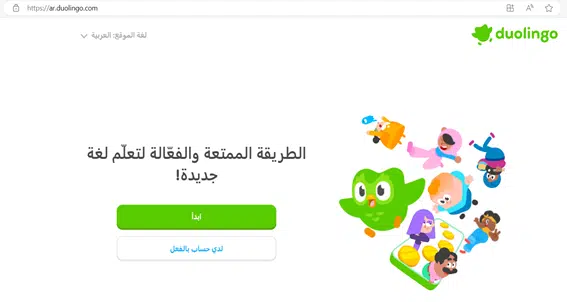
Let’s see how Duolingo has dealt with this problem. The website designers have clearly accounted for different word lengths, so the layout and buttons look neat in every target language.
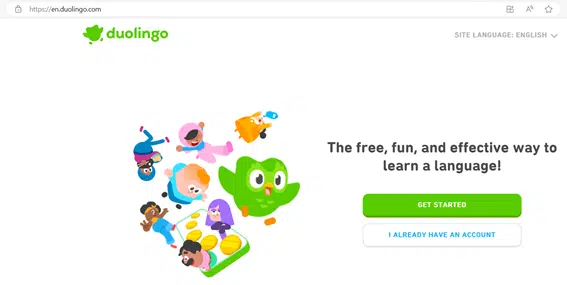
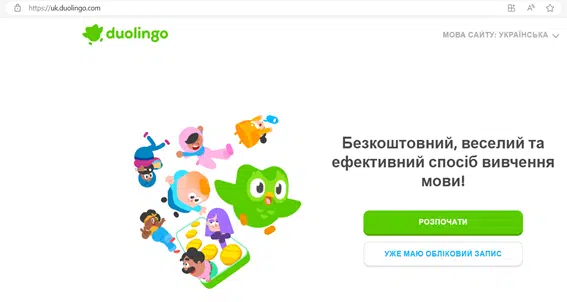
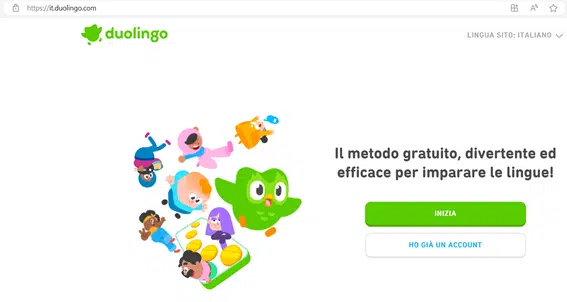
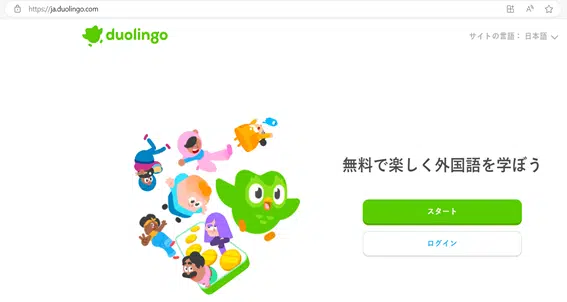
And here is an example of interface adaptation for a different text direction, as in the Arabic culture.
- Language flexibility
The platform or CMS should have the option for easy language and text elements’ switching without the need to introduce significant changes to the code. For example, a WordPress site localization can be changed with WPML (WordPress Multilingual Plugin); it allows adding new languages and translating content directly via the administration interface.
- Intuitive design
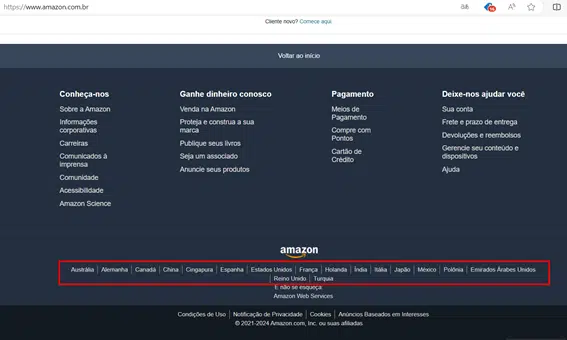
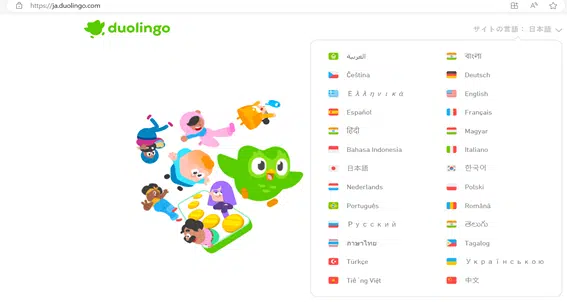
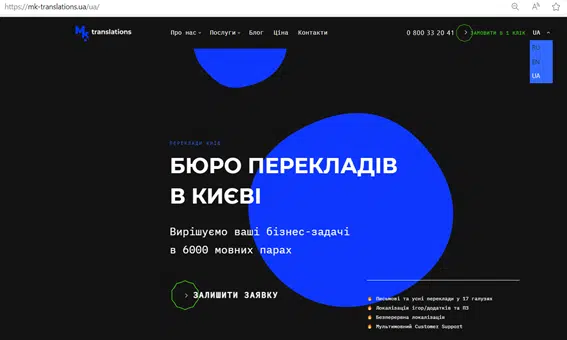
A website should have a simple and easy to understand language switching interface, for instance, in the form of a menu or a dropdown list. Using letter codes in addition to the flags is recommended so that the user is not confused.
For example, Amazon has a convenient language selection option at the bottom of the page:
On Duolingo you’ll find a flag and the language name at the start of the page:
MK:translations website features short language codes in the top menu:
- Adaptive design
Your website should be able to adapt to different devices and screens for the content to be displayed correctly in each language version
- Language coding
Using international coding standards, such as UTF-8, will guarantee correct display of characters from different languages and alphabets, which is important for successful website localization for different cultures and markets.
- Text separation from code and images
Text embedded into images or code can significantly complicate the localization process. A better solution is to create a separate file with all your texts as variables or to use separate databases for storing the content. This will make the translators’ work easier in the future and save you time and money.
- Adaptability of technical elements
Provide for the localization of all the technical elements of your website: date formats, currencies, figures, phone numbers, units of measurement and other parameters that can vary in different countries. Let’s look at a few examples to demonstrate the importance of this.
There is no international telephone number format:
- in Ukraine it is XXX-XX-XX or XXX XX XX;
- in the USA — XXX-XXXX;
- in France dots or spaces are usually used: XX.XX.XX.XX.XX or XX XX XX XX XX;
- in Germany — spaces or dashes: XXX XX XX or XXX-XX-XX.
Date formats follow the same suit:
- in the USA it is MM/DD/YY;
- in Europe mostly DD/MM/YY is used;
- Japan uses the YY/MM/DD format.
So, when translating a website from English (USA) for the Japanese, think about how they would understand a certain date, for instance, 10/12/24.
Creating a website with consideration to the eight aspects above will not just simplify the adaptation process, but will significantly increase the efficiency and speed of launching your product in the international market.
If you are contemplating your next steps and looking for an answer to the question of how you can launch your website localization, contact MK:translations for a consultation. We have a professional team with 9 years of experience and an LQA department that will guarantee accuracy and high quality of localization into 84 languages of the world.
Read also: How LQA will protect you from the consequences of a bad translation


Haven’t found
what you were looking for?
Don’t leave yet!
Just click on the button below, and we will get back to you to consult on all services of the company.
 Contact us
