

How to localize a marketing campaign for your customers without draining the budget


In marketing, the consumer is the King, and in international marketing, there is also a Queen — localization.
The world would be different without it. Just imagine: McDonald’s restaurants don’t open in India because no one eats beef burgers there; the French don’t watch Hollywood movies with strange titles; and in Ukraine, the marketing budgets of global brands are wasted because people don’t understand the message behind their billboards and commercials.
If the product or content does not resonate with the audience, it is impossible to get an appropriate response from them, which means that all the efforts of marketers and the budgets spent will be in vain. Therefore, every message, phrase, and word must be adapted to fit a new market: this is the only approach that ensures business success on the global stage. This approach is called localization of marketing campaigns.
Read also: How to translate video for the global audience: a brief guide
What is localization in marketing
Localization has become a faithful companion of globalization and an essential prerequisite for gaining a competitive advantage. As consumer markets expand, there is a growing need to adapt products and content to new cultures, and whoever can best communicate their message to potential customers gets “access” not only to their hearts but also to their wallets.
While translation accurately reproduces the original text, localization is a creative process of making new content while preserving the emotion and message of the original. This directly applies to advertising in all types of media, including video, audio, printed and online.
Localization is more than just translating a text into the language spoken by the local audience. It requires adapting the brand and all that is related to it while maintaining the primary message and marketing goals.
A few years ago, localization was hardly talked about while general-purpose tools were successfully operating on the market. However, consumer expectations now call for individualized content and marketing strategies that meet the values and needs of each target group. Consumer behavior research shows that 72.4% of customers are likely to buy a product that has information in their native language.
The same goes for content: the success of product promotion depends on whether you speak to your audience in a language they understand, whether you tell them what they want to hear and in a way they want to hear it, and whether you choose the right forms and channels of communication.
Why we need localization
1. Improving organic accessibility
Website localization enables you to deliver a clear message to your target audience at a time and in a way that is convenient for them. Meanwhile, effective content optimization for SEO accelerates the product’s promotion to the level of a global brand.
| Expert’s opinion: Elizaveta Kudelya, Head of content-making at Elit-Web
Cultural differences affect the structure of the website and its content, as well as the benefits that should be highlighted. In the United States, for example, fast delivery and convenient payment methods are key factors in making a purchase decision. In Germany, consumers do not expect fast delivery, so the local audience values quality certificates, guarantees, etc. Even if the countries are very similar, such as Ukraine and Poland or Hungary, cultural differences will still come into play, and this should be taken into account when developing a website for a new market. |
- Lowering the market entry barrier
With the help of localization, you can create a product, a piece of content, or a website that is compatible with any region, country, language, or culture, while remaining true to the brand’s history and identity.
- Perception of the brand as a local one
Localization is not only about telling the audience about the brand in their language but also about giving each target group a sense of belonging. Consumers feel that such a brand was specially created for them, so they trust it more than those with foreign features.
What to consider when localizing a marketing campaign
- Cultural peculiarities
Understanding local culture, traditions, and values is essential for successful localization. Campaign messages and elements must be in line with the perceptions and values of the target audience.
This is what Coca-Cola marketers forgot about when they decided to launch the Share a Coke campaign in Israel. They printed 150 of the most popular names, not a single one of which was Arabic: a huge mistake considering that the cultural identity of Israeli people is linked to religion and ethnicity. Obviously, those of Arabic descent noticed this immediately, and the brand was heavily criticized.
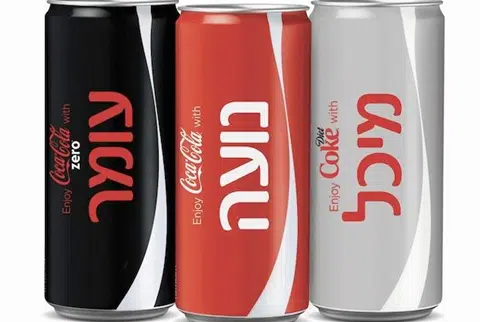
Source: https://www.tabletmag.com/
Cultural peculiarities can also affect the quality of communication between a marketing agency and foreign clients in the course of developing an international strategy.
| Expert’s opinion: Elizaveta Kudelya, Head of content-making at Elit-Web
From my experience, I can give an example based on the Kazakh market. We faced the challenge that clients take a long time to make and agree on decisions. In Ukraine, communication is much faster: the parties exchange arguments and come to an agreement. This does not work with the Kazakhs: you have to wait months for a reply or completion of paperwork. The same goes for representatives of British countries. |
- Linguistic aspects
Not only is it important to translate the text faithfully, but also to take into account the subtleties of language usage. For instance, phraseology, humor, and wordplay are difficult to convey in a foreign language in a way that preserves the meaning and makes it comprehensible for a new audience. Moreover, there are situations when a brand name, a name of a product, or a slogan has negative connotations or unfavorable associations in another culture.
Such as the Danish beer GAVNO, the Dutch clothing brand Donna Dura, Blue Water cologne, the Turkish furniture brand Pediko, and others.

|
Source: www.disorder.dk
|
Source: https://producto.com.ua/ |
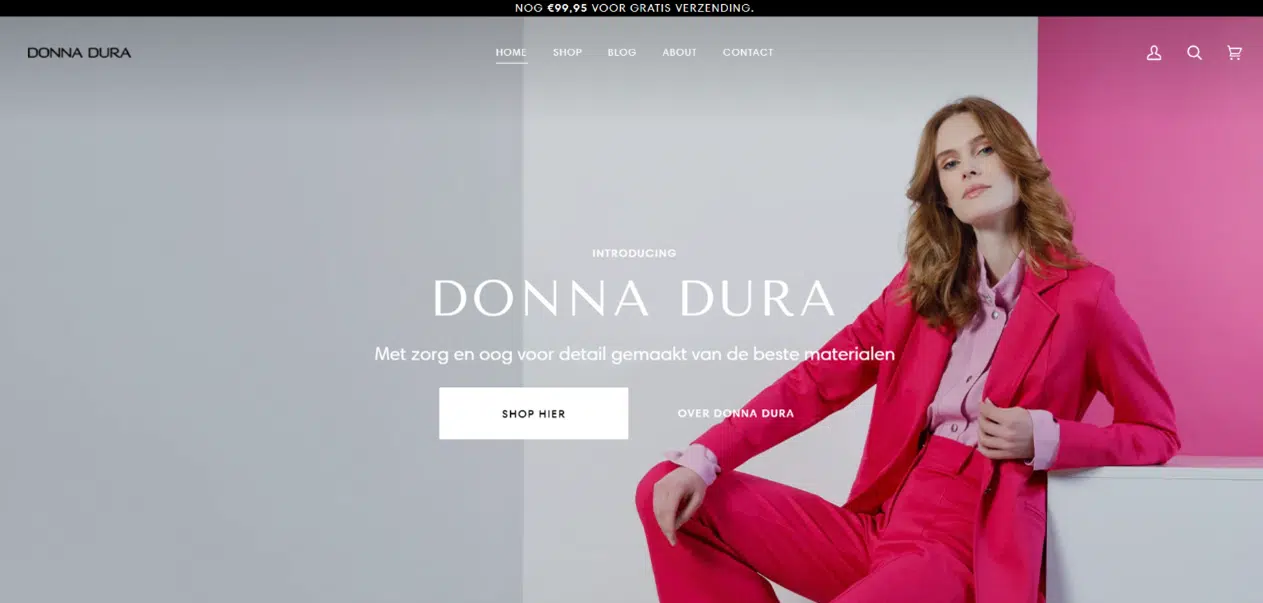
Screenshot of the website
|
|
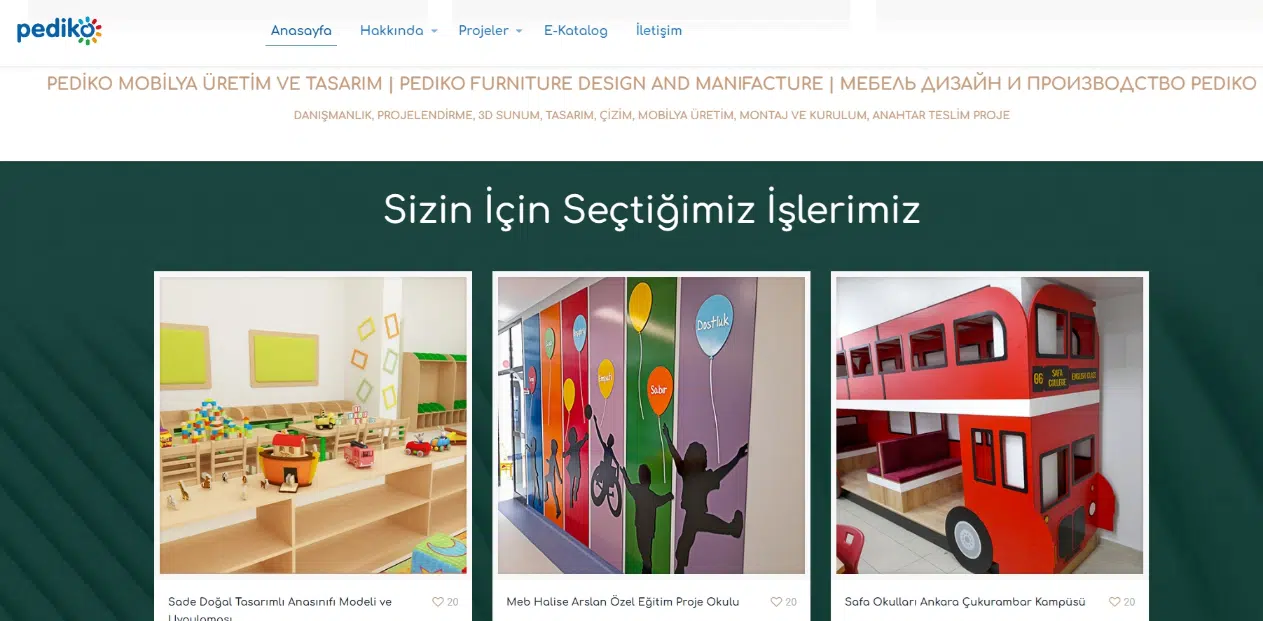
Screenshot of the website |
|
- Local customs and holidays
Incorporating local holidays or traditions into your marketing strategy will emphasize your connection with your audience and help build loyalty. However, this requires caution and awareness so as not to unintentionally hurt the feelings of local consumers and cause a negative reaction.
For example, when developing a marketing campaign for the Asian market, one should know that in China, people don’t buy shoes on New Year’s Eve because, in their language, the word is similar to the concept of “hardship.” The Chinese avoid white and blue colors in clothing, jewelry, and gifts, as well as the number “4” because they symbolize death and mourning. Instead, they dress up in red clothes and give each other two tangerines, two red envelopes with money, or any paired little things to live in unity and harmony.

Source: https://hellochina.me/
- Visual content
Graphics and design must reflect local preferences and aesthetic standards, avoiding images that could be perceived ambiguously and offend the audience.
GAP wanted to portray an interracial family in one of its campaigns. However, the brand got a lot of criticism and accusations of racism for picturing a white girl leaning on a black child. This was interpreted as a metaphor for racial discrimination in all aspects of life.

Source: https://www.mirror.co.uk
- Adapting to the local market
By understanding the competitive environment, consumer needs, and local market trends, you can build a more effective strategy.
The Japanese, for example, unlike the Americans, associate low prices with low quality, which makes them wary of such purchases. This is something Walmart was not aware of when the retailer bought a stake in the Japanese company Seiyu and tried to implement its US-proven Everyday Low Prices campaign in stores.

Source: https://asia.nikkei.com
- Mobility and technology
Taking into account popular platforms and technological features in each region for optimal content distribution.
Each country has local social networks that you should consider when developing a promotion strategy. Examples include Mixi in Japan, Cloob in Iran, Bebo in the UK, and Qzon and QQ in China.
Analyzing popular search engines will be useful for website promotion. For example, these are Google and Bing in the US, Google and Yahoo! in Japan, and Baidu and Sogou in China.
Overall, successful localization requires a deep understanding of the local environment and active engagement with the audience.
| Expert’s opinion: Elizaveta Kudelya, Head of content-making at Elit-Web
What needs to be adapted the most are offers: promotional and internal messages on the website, and social media content. The primary aspect is, of course, the language. British, American, and Australian English have morphological differences. Similarly, German differs from region to region. Therefore, when developing advertising offers, we always involve at least a local editor or proofreader who can choose appropriate and understandable wording for a specific audience. Also, offers should always be based on the customer’s pain points. The needs of the target audience vary from country to country, so you need a separate offer for each country that can clearly and accurately convey the message. Sometimes this even involves communicating with the local audience, especially if the market is new and unfamiliar. |
Examples of successfully localized marketing campaigns
Nike: Nothing Beats a Londoner campaign

Nike Commercial – Nothing Beats a Londoner (youtube.com)
This is a campaign for a niche target audience. The video explains what it means to be young and successful in London. It features promising and well-known British athletes. In the first three days, the video gained about 2 million views on YouTube, and its popularity is due to humor, dynamic visuals, and an emphasis on cultural diversity.
Kit Kat: edible postcard for Japan’s market
When Rowntree created Kit Kat in the 1940s, little did they know that in Japanese this name is consonant with the expression “Kitto Katsu,” meaning “confidence in victory.” Once the chocolate was launched on the Japanese market, marketers discovered this fact. “It would be a sin not to take advantage of this,” they thought, and placed the phrase “Kitto sakura saku yo!” (“Dreams come true!”) in local promotional materials. Then, they had hotels located near the exam centers distribute Kit Kats with the slogan on the flyers to students. And it worked: sales skyrocketed among students all over Japan, and the chocolate bar became a lucky charm for students.
“Why not use it again?” someone from the marketing department said, and the Edible Postcard campaign was born: a customized chocolate bar on which you can write your message and then send it by Japanese mail.
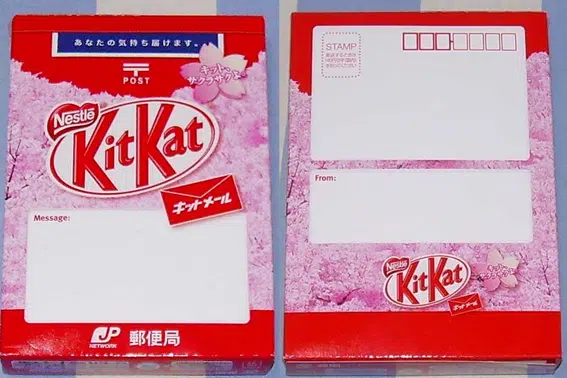
This time, besides the huge demand, the brand also received free promotion in all the popular media.
Samsung: A “universal” advertising campaign for the international audience
The brand used internationalization to create content for several cultures at once, which required minimal adaptation to new markets: all that was needed were corresponding subtitles. This significantly saved time and money.
The Olympic ‘Anthem’ – (Rio 2016 Olympic Games) Samsung TVC (youtube.com)

How to avoid making mistakes
Localization is the key to success in new markets. If properly executed, it will increase the ROI of your content investment, speed up entry into the market, and help promote your brand.
However, many things can go wrong in the process of localizing marketing campaigns due to lack of experience, insufficient market analysis, and unawareness of the cultural features of the audience. You may lose time, money, and competitive advantages if you don’t delegate localization to a professional service provider from the very beginning.
MK: translations’ offer includes more than just text translation and adaptation, but also market research, transcreation, audio and video adaptation, website localization, and multilingual copywriting. We can take care of all the steps to adapt your marketing campaigns in a confidential manner. So don’t waste your time — contact our manager right now for a consultation and a cost estimate for your project.
Read also: How LQA will protect you from the consequences of a bad translation


Haven’t found
what you were looking for?
Don’t leave yet!
Just click on the button below, and we will get back to you to consult on all services of the company.
 Contact us
