

How to Translate a Book to Make It a Bestseller


Literary translation is a subject of curiosity, not only for translators but also for well-known and aspiring authors, publishers, and online retailers like Amazon. Everyone involved in the publishing industry shares a common interest in high-quality translations that can help achieve their unique goals.
In a recent webinar conducted in collaboration with Ranok Publishing House, we delved into the main nuances and challenges of literary translation.
Ranok is an innovative leader in the Ukrainian publishing market with a 25-year history, specializing in educational, methodical, and children’s literature.
The recording of the webinar is available via this link. And in this article, we’ll share the most interesting insights.
Read also: 7 CAT programs that make the translator’s life easier
Why Translate Fiction
Translating books into foreign languages serves as the main tool for promoting literature abroad. Besides, this not only provides the opportunity for Ukrainian readers to access foreign authors’ works but also allows the rest of the world to discover books by Ukrainian authors.
- Publishers aim to not only create their own literary products but also introduce global bestsellers to the Ukrainian market. In today’s digital age, where connections span continents within seconds, Ukrainian readers look forward to the chance to read international bestsellers in their native language.
- For authors seeking to present their already published books to a foreign audience, two options are available: selling the rights to a publishing house for translation or taking on the task of translation themselves, in print or digital format, for distribution, such as through platforms like Amazon.
- Since the outbreak of the full-scale war, thousands of Ukrainian citizens have fled their homeland. They, too, require Ukrainian books to be translated into various languages to facilitate their language learning and skill development. Reading a story with a familiar plot and characters in a foreign language makes the learning process much smoother.
- There are some popular books and characters that have garnered foreign readers’ interest. For example, “Patron the Dog and the Sock Monster”, a Ukrainian comic book, has become a local bestseller. It has already been translated into Polish, and its English translation is currently in production. This helps introduce the world to Ukrainian heroes, national ideas, and culture.
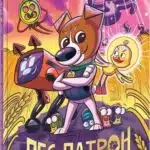
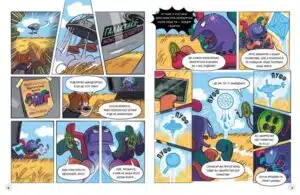
- Another reason to translate books is to expand sales markets. A book in Ukrainian may not always find its way into European bookshops, but a translated version significantly improves its chances. This principle holds true for international online shopping websites and digital stores as well.
How to Translate a Book in Ukraine and Abroad
- A publishing house acquires a license for a book and translates it into Ukrainian.
- The publishing house translates its own books into foreign languages for international readers.
- Publishers sell the rights to the book abroad.
- Publishers sell book rights and print editions at Ukrainian printing houses.
A Successful Literary Translation from a Publisher’s Perspective
Certainly, the primary prerequisite for a successful book translation is the involvement of an experienced translator and a professional editor. However, a significant aspect of success depends on market demand. It’s one thing to create a good translation that might not resonate with anyone and, therefore, go unnoticed. It’s quite another to translate a book in response to audience demand, as exemplified by the case of “Patron the Dog and the Sock Monster.” In this instance, the publisher received multiple requests to translate the book into English for sale in other countries. Naturally, more effort is invested in such requests to produce an outstanding product.
Translation is a big responsibility. There are instances when the source material may lack significant aesthetic or literary value, but it contains a captivating story and characters. With skillful translation, you can enhance the plot, add some “flavor”, and transform the book’s reception entirely.
A poor translation, on the contrary, can ruin even the most captivating ideas and stories that the author had in mind. In such cases, it doesn’t matter whether the translation was botched by a freelancer hired for a one-time job, an in-house translator at a publishing house, or a contracted translation manager. Every person involved shares a singular objective: to faithfully capture the author’s emotions and tone of voice. This becomes especially important when multiple books within the same series must convey a consistent mood, which is a challenge when different people handle the translation.
Another factor that impacts the quality of translation is desktop publishing (DTP). Text in various languages may occupy different amounts of space. This might become a real challenge, particularly in children’s books with numerous illustrations, where altering the page structure and layout is not an option. When dealing with comic books, the challenge intensifies due to the specific size of text bubbles. Translators are required to find synonyms, similes, and appropriate substitutes to fit the character limit while maintaining the essence of the original text.
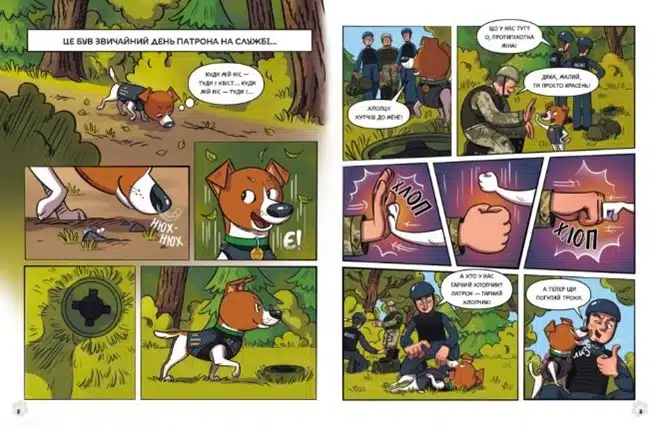
One of the foremost challenges of literary translation is the faithful preservation of the emotions and mood of the original piece. An excellent example can be found in the comic book “Patron the Dog and the Sock Monster”, which features a quote from the iconic Ukrainian song “Oh, the Red Viburnum in the Meadow”. When translating the book into Polish, the lines from the Polish song “Hey, Falcons!” were used to ensure that local readers experienced the very emotions the comic book’s author intended.
Moreover, it’s crucial to take into account the specific dialect of the target language. For example, when translating a Ukrainian book into English, it’s important to consider the future market and decide whether to focus on Canadian, American, or British English.
To preserve the book’s mood, style, and emotions, a skilled translator must:
- understand and recreate important elements such as internal monologues, dialogues, and humor;
- create a translation that aligns with the style and tone of the original piece;
- occasionally make minor adjustments to adapt the text to the cultural context or current events.
Therefore, there’s no need to fear that artificial intelligence can easily replace human translation in literary contexts. Here, it’s far more crucial to maintain the author’s original intent by adapting the text to the cultural nuances of the audience rather than merely conveying the exact meaning of the source text. AI is not able to handle this task, for sure.
Read also: Why literary translation cannot be a literal copy of the original
Things to Consider When Performing a Literary Translation
Translating a work of fiction is more than simply transposing content into another language. Think about it as a new piece, co-authored by the translator and the editor.
Translation of the Book’s Title and Character Names
Translating titles can be a complex task, as the title often encapsulates the essence of the work, regardless of the genre. The title serves as the artistic hallmark of the work.
Sometimes, translators adapt titles to make them more relatable to foreign readers. For example, the adaptation of the title of E.-M. Remarque’s novel:
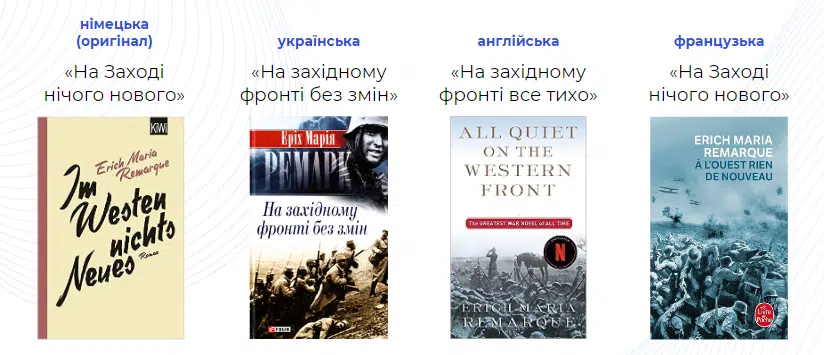
If the title represents an artistic image that is difficult to translate directly, the translator may seek semantic correspondence or change the title altogether due to cultural and linguistic differences. For instance, Ismail Kadare’s “Dimri i Madh” (“The Great Winter”) was translated into Ukrainian as “Severe Winter”, and the J. Giraudoux’s “Pour Lucrèce” (“For Lucretia”) became “Duel of Angels” in English.
In general, when it comes to translating the titles, everything depends on the translator’s interpretation of the work, the preferences of customers (publishers, producers), and their intended reader engagement strategy.
When translating proper names in fiction, four methods are usually employed:
- Transliteration: Direct letter-by-letter transfer (e.g., “Harry Potter” as “Гаррі Поттер”).
- Transcription: Using the original pronunciation of the name (e.g., “Severus Snape” as “Северус Снейп”).
- Tracing: Breaking the name into morphemes and transferring it in parts (e.g., “Griphook” as “Крюкохват”).
- Choosing a name similar in meaning or reflective of the character’s personality or actions.
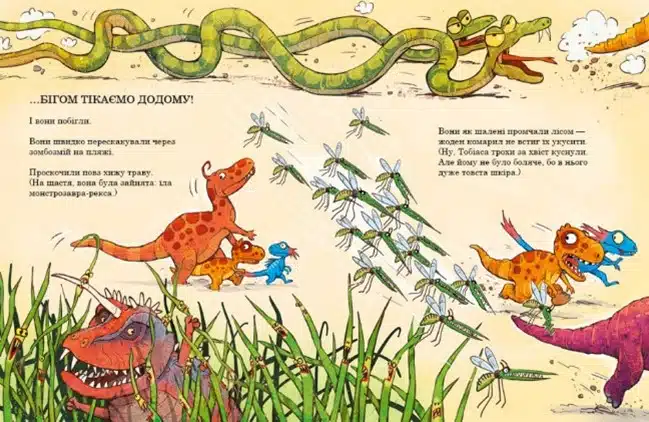
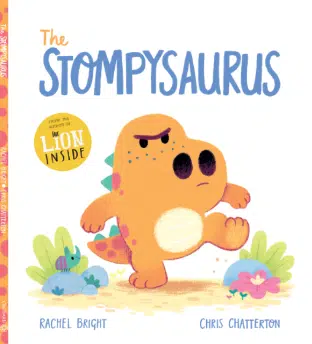
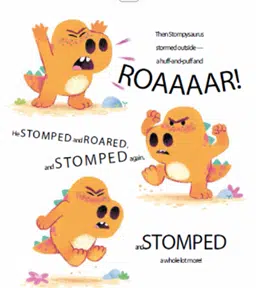
For example, in the translation of a children’s book from English to Ukrainian, the translator had to find a Ukrainian equivalent for “Stompysaurus”, the little dinosaur known for stomping its feet when frustrated. In Ukrainian, it’s difficult to pronounce and not easy to put into a poetic form. That’s how the Ukrainian character Злюсик (i.e. “angry little guy”) came to life.
Pitfalls of Literary Translation
- Idiomatic Expressions
Translating idiomatic expressions can be one of the most daunting tasks for a translator. They must not only grasp the meaning of specific fixed expressions or idioms in the source language but also find equivalent options in the target language. For instance, “old boy” in English is not simply “an old boy” in Ukrainian but rather “приятель,” meaning “an old friend.” Likewise, “to let one’s hair down” translates to “розслабитись” (to relax), not the literal “розпустити волосся” (to let one’s hair down). Another example is the English idiom “that’s the heart of the matter,” which is rendered in Ukrainian as “ось де собака заритий” (“that’s where the dog is buried”).
Humor
Linguists classify humor into three categories:
- Universal humor: comprehensible to all, regardless of cultural characteristics;
- Humor that is often reliant on culture-specific elements or professional jargon;
- Linguistic humor: based on wordplay that is nearly impossible to translate directly.
When translators encounter a joke in a book that is challenging to translate, they typically have three options: remove the joke from the text entirely, translate it literally, or try to adapt the joke to make it clear to foreign readers.
- Historical and Cultural Features
Different countries and cultures may hold varied or even opposing perspectives on historical events or figures. Similar cultural sensitivities can arise in the relations between England and France, China and Taiwan, and attitudes towards the swastika, which vary by local culture: it is banned in Germany, while in India it is a revered religious symbol.
However, cultural adaptation is not always necessary. Let’s take a look at the picture.
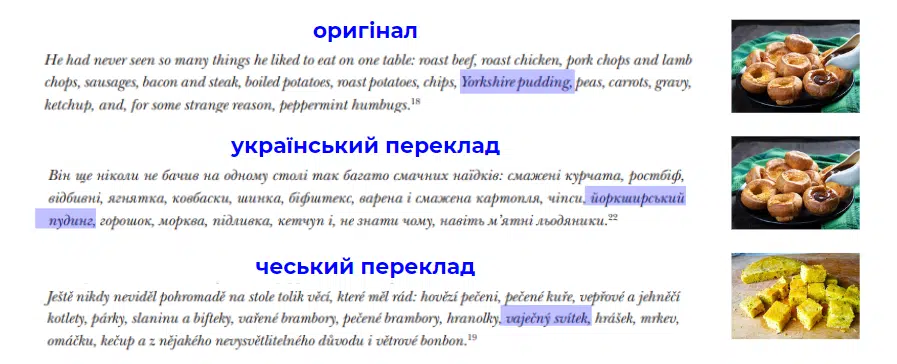
In many books, descriptions of dishes are provided, and some translators attempt to align them with local cuisine to enhance familiarity for readers. However, this approach can have unintended consequences. In the Ukrainian translation, “Yorkshire pudding” is translated into Ukrainian, while in the Czech version, it’s referred to as “vaječný svítek.” The Czech translator replaces the English dish with a traditional Czech one, which may be dissimilar to the original. In doing so, they transport readers to Czechia rather than immersing them in the English flavor and culture.
Why Errors Occur During Book Translation
There can be many reasons, but the main ones include:
- Tight translation deadlines, which don’t allow for enough attention to each project.
For example, when Nassim Taleb was scheduled to visit Ukraine, Nash Format Publishers rushed to release translations of his books, “Black Swan” and “Antifragile”. However, due to tight deadlines, the translation turned out to be of poor quality, so they had to replace the translator and involve additional editors. As a result, the publishers spent more than anticipated due to translation revisions.
- The publishers or authors aim to cut costs.
Errors frequently arise due to using machine translation, choosing the Russian version as the source text instead of the original, or both. As in this case.
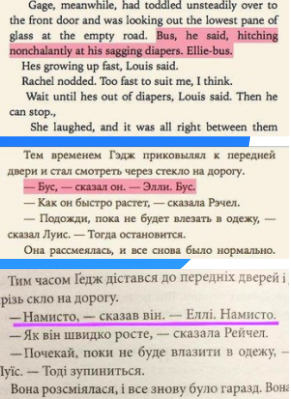
Here’s an excerpt from Stephen King’s book “Pet Sematary”, published by Family Leisure Club in 2015. As you can see, initially, the machine translation into Russian was conducted, and the quality decline went unnoticed. Then, the text was translated into Ukrainian, resulting in numerous complaints from readers and the removal of this edition of the book from sale.
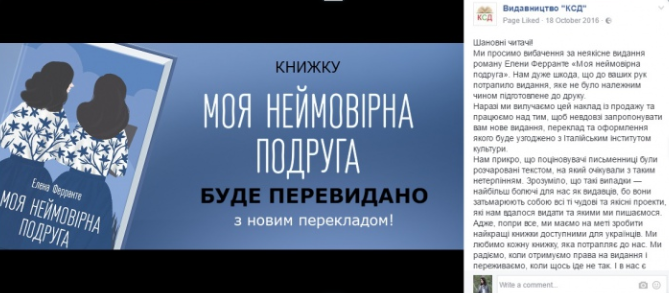
Another case involving the same publishing house is the Ukrainian translation of the novel “My Brilliant Friend” by Italian writer Elena Ferrante. It caused significant dissatisfaction among readers due to poor phrasing and clumsy sentences. For instance:
«Вона накинулася збоку, одна проти своєї товаришки, яка подала багато знаків, якими давала зрозуміти, що нудьгує». (“She pounced from the side, alone against her companion, who gave many signs that indicated that she was bored.”)
The publisher promptly announced the removal of the edition from sale, with a commitment to refund readers and reissue the problematic part.
- Unprofessional approach.
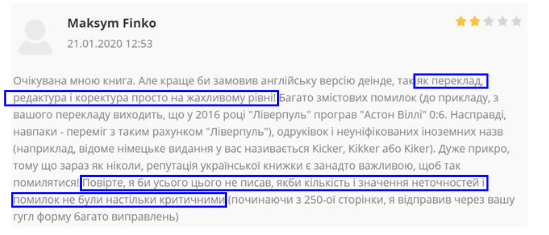
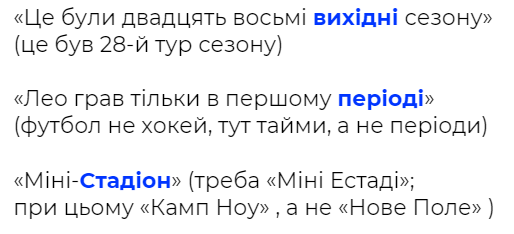
When someone without experience and expertise in a specific topic takes on translation tasks, errors cannot be avoided. Here are some examples when translators who were clearly not sports enthusiasts have been tasked with translating books about football, leading to inaccuracies and loss of context.


How to Ensure High-Quality Literary Translation
To achieve this, several essential conditions must be met:
- Clearly defined team: Each translation team member should understand their role, scope of work, and deadlines. When working on a series of books, it’s better to avoid changing translators and editors if they did well in previous projects.
- Native speakers: Engaging them ensures the highest quality translation in terms of grammar, style, and the use of language constructions.
- Professional software: Using Computer-Assisted Translation (CAT) programs, glossaries, and Translation Management Systems (TMS) helps maintain consistency and terminology accuracy.
- Quality assurance: It helps identify possible inaccuracies and errors and allows for timely corrections.
- Progress control: Effective team coordination and communication can help prevent violations of requirements and deadlines, ensuring that the translation meets quality standards.
Read also: Communication without boundaries thanks to sign language interpretation services


Haven’t found
what you were looking for?
Don’t leave yet!
Just click on the button below, and we will get back to you to consult on all services of the company.
 Contact us
